
This page is designed to get you straight to the information you need. Rather than making you read through paragraphs of introductory text, we have organized Dublin’s primary attractions into functional categories.
Use the index boards below to jump directly to specific attraction guides, or scroll down for our practical advice on how to structure your days, navigate the city, and decide if a sightseeing pass is worth your money.
The Icons
These are the heavy hitters—the locations that define Dublin’s tourism landscape. They draw the largest crowds, require advance booking, and generally anchor a first-time visitor’s itinerary.
The Complete Guide to Visiting the Guinness Storehouse
Everything you need to know about navigating Dublin's most famous brewery experience, from ticket types to securing a spot at the Gravity Bar.
The Practical Guide to the Book of Kells & Trinity College
Navigate Ireland's oldest university and its most famous 9th-century manuscript.
The Complete Guide to EPIC The Irish Emigration Museum
Navigate Dublin's fully digital museum dedicated to the 10 million people who left Ireland and how they shaped the world.
If you want to visit the Guinness Storehouse or see the Book of Kells, you cannot reliably walk up and buy a ticket on the day, especially between May and September. Book your Guinness Storehouse Entry Ticket and your Trinity College access at least two weeks before your trip.
Historic Sites
Dublin’s history is dense, complex, and often turbulent. These sites tell the story of the city from its medieval foundations through British rule and the fight for Irish independence.
🗺️ Keep Planning: If you are building a history-focused itinerary, consider adding the Christ Church Cathedral and St Patrick’s Cathedral to your list. Read our dedicated churches guide for the logistical differences between the two.
Hidden Gems
Note: While “hidden gem” is a tired travel cliché, we use this category for highly specific, culturally significant sites that sit just outside the standard tourist loop. They are rarely crowded and offer a highly localized look at Dublin’s architectural and social history.
Evaluating Discount Passes
If you plan to visit three or more paid attractions, you will likely encounter advertisements for Dublin’s sightseeing passes. They are not a universal money-saver; their value depends entirely on your pace.
We have a comprehensive breakdown in our passes compared guide, but here is the short version:
The Dublin Pass (Go City)
- How it works: You buy a pass for a set number of days (1 to 5) and can enter as many of the 40+ included attractions as you want.
- Includes: Guinness Storehouse, EPIC Museum, Hop-on Hop-off Bus, Christ Church Cathedral, Jameson Distillery.
- The Catch: You need to complete at least 3 high-ticket items per day to break even. It requires a fast pace. Read our full Dublin Pass review.
Go City Explorer Pass
- How it works: You buy a pass for a set number of attractions (3, 4, 5, or 7) and have 60 days to use it.
- Includes: Most of the same attractions as the all-inclusive pass.
- The Catch: Because the upfront cost is relatively high, you must use it on the most expensive attractions (like the Guinness Storehouse or the Hop-on Hop-off Bus) to save money. If you use it on a €10 cathedral ticket, you lose money. Read our full Explorer Pass review.
Audience Segmentation: How to Tackle Dublin
Dublin is compact, but its attractions cater to very different travel styles. Here is how to approach the city based on your constraints.
For the Time-Poor (1 to 2 Days)
If you are here for a weekend, geographical clustering is your best friend. Do not bounce between the north and south sides of the River Liffey.
- Day 1 (Southside History & Pints): Start early at Trinity College for the Book of Kells. Walk up Dame Street to Dublin Castle, grab lunch in the Temple Bar neighborhood (look, don’t drink—it’s overpriced), and spend your afternoon at the Guinness Storehouse.
- Day 2 (Northside & Emigration): Start at the EPIC The Irish Emigration Museum in the Docklands. Walk up to O’Connell Street to see the GPO Museum, and finish with a Jameson Distillery Guided Tour in Smithfield.
- Transit Hack: If you only have 48 hours, a Hop-on Hop-off Bus Tour is actually a highly efficient transit tool to bridge the gap between the city center and western sites like Kilmainham Gaol and Phoenix Park.
For Budget Travelers
Dublin is an expensive city, but it has a massive advantage for budget travelers: the national museums and galleries are completely free and require no advance booking.
- The Free Route: You can build an entire itinerary around the National Museum of Ireland (Archaeology branch on Kildare Street is excellent for Viking and bog body exhibits), the National Gallery, the Chester Beatty Library (housed in Dublin Castle gardens), and the National Botanic Gardens in Glasnevin.
- Skip the Paid Pints: Instead of paying €30+ for a distillery or brewery tour, spend that money in a genuine local pub. Read our best pubs guide for authentic spots outside Temple Bar.
- More Tips: See our dedicated budget guide and free things to do directory.
For Families
Dublin is highly walkable, but little legs will get tired on the cobblestones.
- Top Picks: The Dublin Zoo in Phoenix Park is world-class and takes up a solid half-day. The National Wax Museum Plus is a reliable rainy-day backup.
- Logistics: Strollers are fine on the Luas (tram) and DART (coastal train), but navigating them onto standard Dublin Buses during rush hour (8:00 AM - 9:00 AM and 5:00 PM - 6:00 PM) is frustrating.
Logistics & Getting Around
You do not need a car in Dublin. In fact, having a car in the city center is a massive liability due to one-way systems, pedestrianized zones, and exorbitant parking fees.
Walking: Dublin is fundamentally a walking city. You can walk from St. Stephen’s Green (south) to O’Connell Street (north) in about 15 minutes.
Public Transit: If you need to rest your feet or head out to the coastal suburbs, you will use the Transport for Ireland (TFI) network.
- The Luas: The light rail tram system. The Green Line runs north-south; the Red Line runs east-west (useful for getting to Heuston Station, the Guinness Storehouse, and the Jameson Distillery). See our Luas guide.
- The DART: The coastal train. You will only use this if you are taking day trips to coastal villages like Howth or Bray. See our DART train guide.
- Dublin Bus: The extensive double-decker bus network. It is comprehensive but subject to city traffic.
The Leap Card: Do not pay cash for transit. Buy a TFI Leap Card (a reloadable smart card) or a Visitor Leap Card at the airport or any convenience store (Centra, Spar). It caps your daily spending and makes tapping on and off seamless. Read our Leap Card guide for the math.
Local Survival Tips
- The Weather Dictates the Schedule: Dublin weather changes by the hour. Always have a rainy-day backup plan. If the sun is shining, drop your museum plans and head to St. Stephen’s Green, Phoenix Park, or take the DART to the coast. Save the Little Museum of Dublin or the Irish Rock ‘n’ Roll Museum for when it pours.
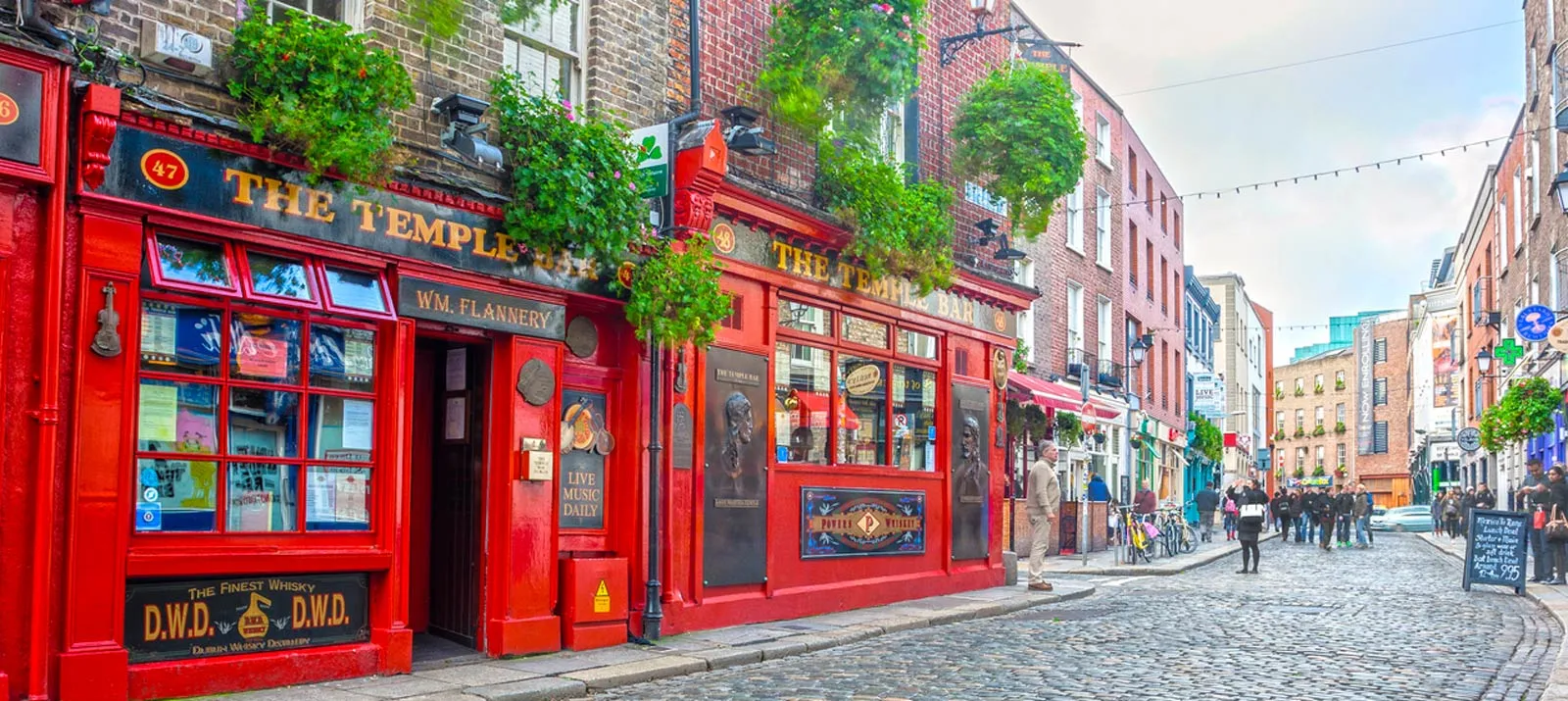
- Temple Bar is for Looking, Not Buying: Walk through the cobbled streets of Temple Bar to hear the music and take photos. Then, leave the area to buy your food and drinks. The prices in Temple Bar are heavily inflated for tourists.
- Look Right: If you are visiting from North America or mainland Europe, remember that traffic drives on the left. Look right before stepping off the curb. The city paints “Look Right” on the pavement at major crosswalks for a reason.
- Museum Mondays: Many smaller museums and historic sites (and some restaurants) are closed on Mondays. Always check operating hours before walking across town.
Where to Base Yourself
Your hotel location will dictate how much you rely on public transit.
- St. Stephen’s Green / Merrion Square: The most upscale, quiet, and central area. You are walking distance to the major museums and high-end dining.
- The Liberties: Historically working-class, now rapidly gentrifying. Great if your focus is the Guinness Storehouse, Teeling Distillery, and St. Patrick’s Cathedral.
- Smithfield: North of the river. Excellent transit connections (Red Luas line), great cafes, and home to the Jameson Distillery.
Use the map below to check current rates and availability across the city.
🗺️ Keep Planning: For a deeper dive into specific streets and hotel recommendations, read our comprehensive where to stay in Dublin guide.
Frequently Asked Questions
Do I need to book Dublin attractions in advance?
Yes, for the major sites. The Guinness Storehouse, Kilmainham Gaol, and the Book of Kells frequently sell out days (or weeks) in advance, particularly from May through September. National museums and smaller galleries usually allow walk-ups.
What is the best day trip from Dublin?
If you want dramatic scenery, the Cliffs of Moher & Galway City Tour is the most popular, though it is a very long day on a bus. For a shorter trip with less driving, taking the DART train to Howth for a cliff walk, or booking a Wicklow and Glendalough Tour offers incredible scenery just an hour south of the city.
Is the Dublin Pass actually worth the money?
It is only worth the money if you plan to visit 3 to 4 expensive attractions per day (e.g., Guinness, Hop-on Hop-off Bus, Christ Church) and maintain a very fast sightseeing pace. If you prefer to wander, sit in cafes, or visit free national museums, you will lose money on the pass.
Are Dublin's national museums really free?
Yes. The National Museum of Ireland (all branches, including Archaeology and Decorative Arts), the National Gallery of Ireland, and the Irish Museum of Modern Art (IMMA) are completely free to enter. Some temporary special exhibitions within them may charge a small fee, but the permanent collections are free.
How much time do I need at the Guinness Storehouse?
Plan for about 2 to 2.5 hours. The experience is self-guided across seven floors, culminating in a free pint at the Gravity Bar on the top floor. If you book an add-on experience like the Stoutie (your face printed on the foam) or the Connoisseur Bar, add another 45 minutes.
Can I use Uber in Dublin?
Yes, but it works differently than in the US. Uber in Ireland only dispatches licensed taxis; there are no private citizens driving their own cars for Uber. You can also use the FREENOW app, which is the dominant taxi-hailing app in Ireland. Read our taxi and Uber guide for details.