
Trinity College is an active, working university right in the center of Dublin, but for most visitors, it serves one primary purpose: housing the Book of Kells.
This 9th-century illuminated manuscript is one of Ireland’s greatest cultural treasures, and the Old Library that holds it—specifically the Long Room—is arguably the most photographed interior in the country. Because of this, visiting requires a bit of strategy. You cannot simply walk in off the street to see the book; tickets sell out weeks in advance, and the queues can stretch down the cobbled pathways of the campus.
This guide breaks down exactly how to plan your visit, what to look for when you get inside, and how to choose the right ticket or guided tour based on your schedule and budget.
Historical Context: What is the Book of Kells?
The Book of Kells is a masterwork of Western calligraphy. Created by Celtic monks around the year 800 AD, it contains the four Gospels of the New Testament in Latin. What makes it significant isn’t just the text, but the elaborate, complex illustrations (illuminations) that decorate the pages. The monks used intricate knotwork, figures of humans and animals, and vibrant pigments imported from across the known world to create a visual masterpiece.
Originally housed in the Abbey of Kells in County Meath, the book was moved to Dublin in the 17th century for safekeeping during the Cromwellian period. It was eventually presented to Trinity College, which was founded in 1592 by Queen Elizabeth I. Today, the manuscript is kept in a climate-controlled display case in the Old Library, which was built between 1712 and 1732.
The Old Library Redevelopment Project: Trinity College is currently undertaking a massive conservation project. While the Book of Kells remains on display, many of the 200,000 books in the Long Room are being temporarily removed for cleaning and preservation. You will still see the architecture, but some shelves may be empty during your visit.
5 Architectural and Cultural Highlights
When you visit, the experience is split into several parts: the exhibition leading up to the book, the manuscript itself, the Long Room, and the surrounding campus. Here is what you should focus on.
1. The Turning of the Page
The Book of Kells exhibition walks you through the history, materials, and techniques used by the monks. The climax of this section is the darkened treasury room where the book itself is kept. Because the manuscript is bound in four separate volumes, only two volumes are typically on display at any given time. One is opened to a major decorated page, and the other to a text opening.
Local Tip: The pages are turned roughly every eight weeks. You can check the official Trinity College Library website to see which specific pages are currently on display.
2. The Long Room
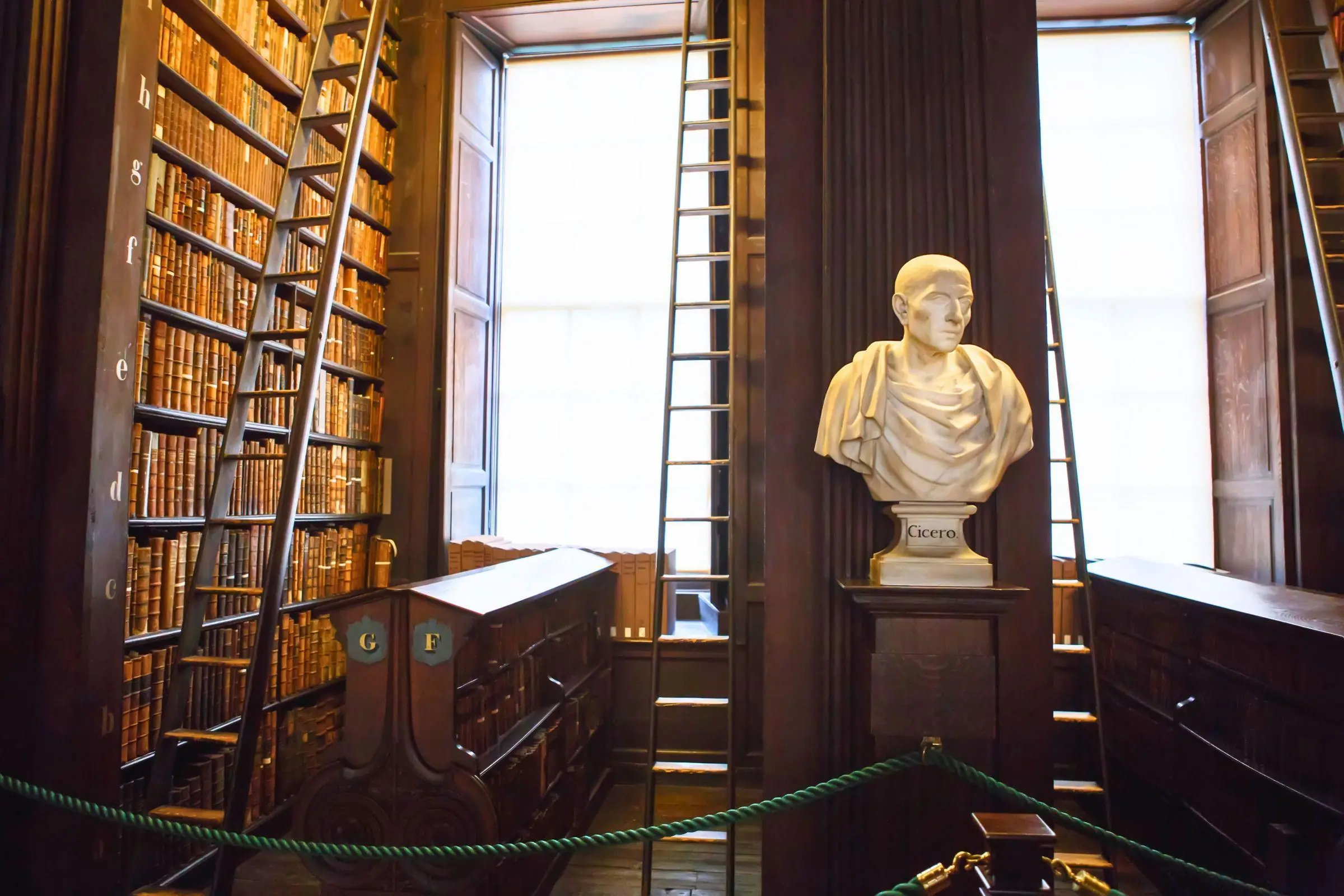
After viewing the manuscript, you head upstairs to the Long Room. At nearly 65 meters in length, it is filled with oak bookcases and a striking barrel-vaulted ceiling added in 1860 to accommodate more books. The room is lined with marble busts of great philosophers and writers, with Jonathan Swift (author of Gulliver’s Travels) being the most famous. The smell of old paper and wood is distinct, and the scale of the room is genuinely impressive.
3. The Brian Boru Harp
Displayed within the Long Room is the Brian Boru Harp, dating back to the 14th or 15th century. It is the oldest surviving Irish harp and serves as the model for the national emblem of Ireland (the one you see on Irish coins and the Guinness logo). It is crafted from oak and willow and originally had 29 brass strings.
4. The Campanile
Outside the library, in the main cobbled square of the university (Parliament Square), stands the Campanile. Erected in 1853, this bell tower is the iconic symbol of Trinity College.
Local Tip: University superstition dictates that any student who walks beneath the Campanile while the bell is tolling will fail their exams. You’ll notice students giving it a wide berth, while tourists walk right through it.
5. Sphere Within Sphere
Located outside the Berkeley Library, this modern bronze sculpture by Italian artist Arnaldo Pomodoro provides a sharp contrast to the 18th-century architecture surrounding it. The sculpture features a fractured outer sphere revealing a complex, gear-like inner sphere. It’s a popular meeting point and photo spot on campus.
Dublin Castle
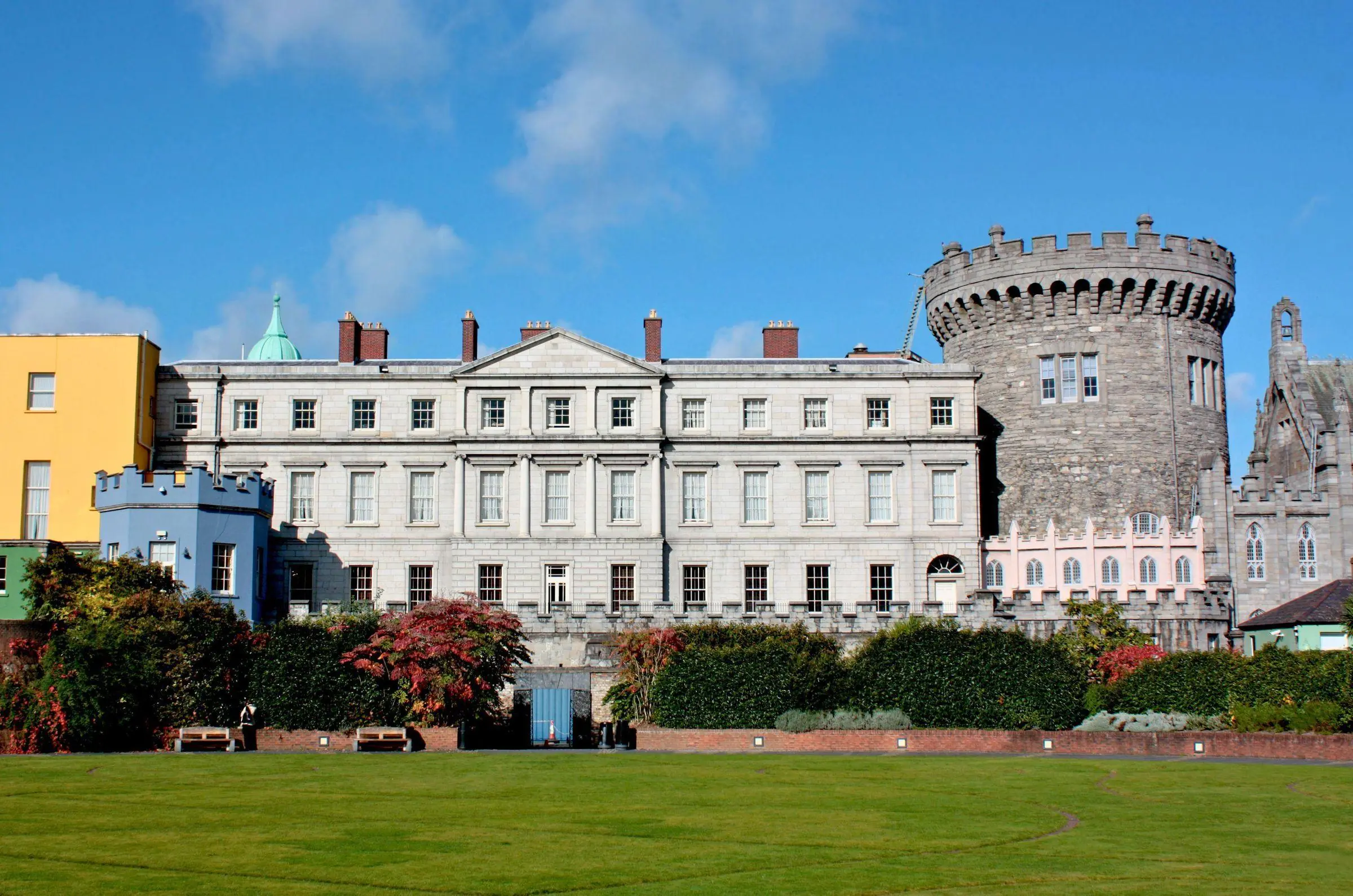
Everything you need to know to navigate 800 years of Irish history at Dublin Castle.
Christ Church Cathedral
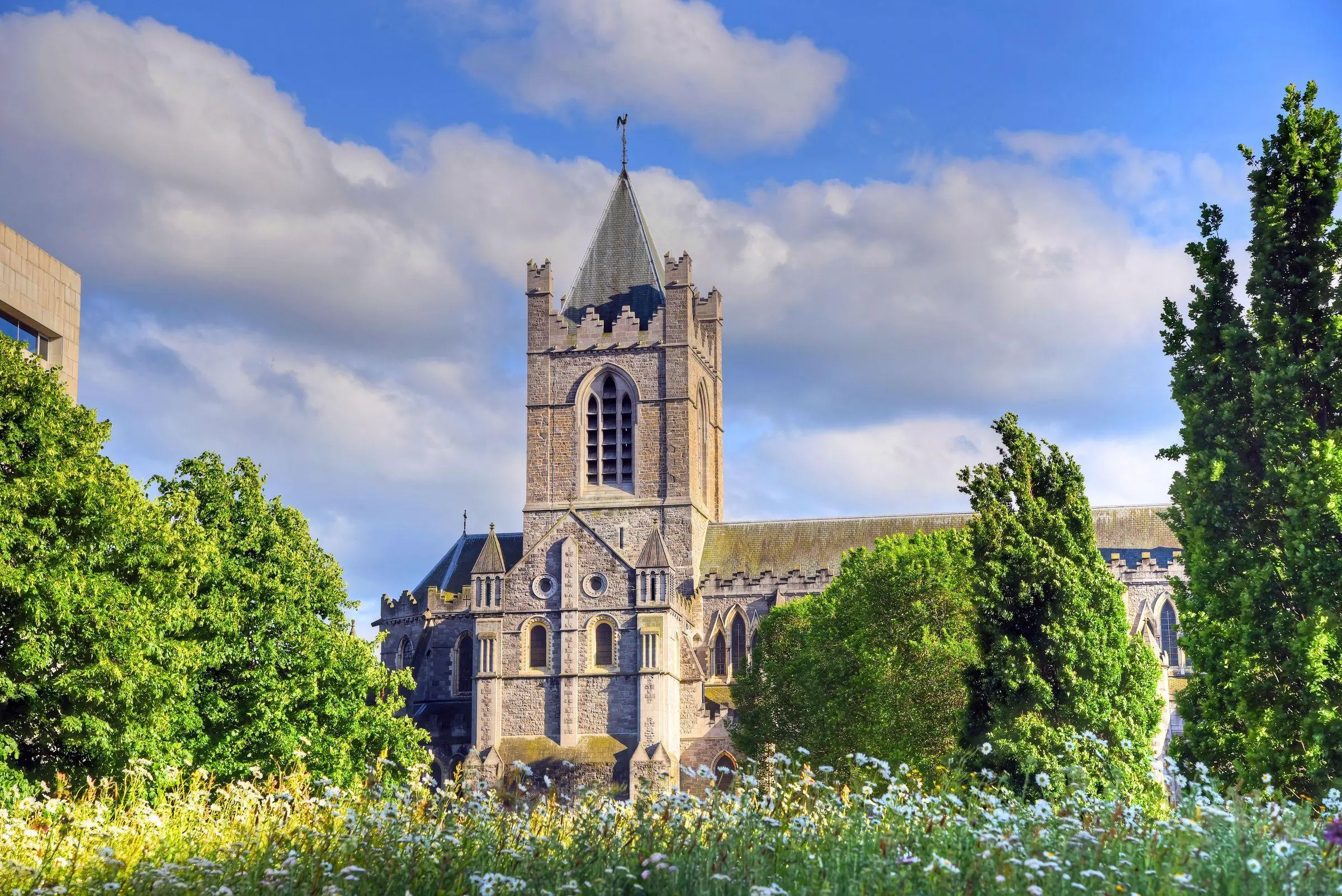
Explore Dublin's oldest working structure, from its soaring Victorian-restored nave to its sprawling 12th-century medieval crypt.
Ticket Options: Independent vs. Guided
Securing entry to the Book of Kells is the biggest hurdle for visitors. You essentially have three ways to do it: buy a direct ticket from the university, book a third-party guided tour that includes skip-the-line access, or book a campus-only walking tour if you don’t care about seeing the manuscript.
Audience Segmentation: Which ticket is right for you?
- For Budget Travelers: Book the standard entry ticket directly through the Trinity College website. You must do this 3 to 4 weeks in advance for summer dates. It costs around €18.50.
- For the Time-Poor (or Last-Minute Planners): If official tickets are sold out, your best fallback is booking a guided walking tour that includes pre-purchased group entry. These tours often combine Trinity College with nearby sites like Dublin Castle.
- For Families with Young Children: The Long Room requires quiet voices, and the exhibition involves a lot of reading. If your kids are restless, skip the interior and instead book the Trinity Trails Campus Tour. It keeps you outdoors and moving.
Book of Kells & Dublin Castle Fast-Track
- Includes guaranteed entry to the Book of Kells
- Guided tour of the exterior Trinity College campus
- Fast-track entry and guided tour of Dublin Castle
- Ideal if official Trinity tickets are sold out
Trinity Trails Guided Walking Tour
- 45-minute guided tour led by a Trinity student
- Explores the history and architecture of the campus
- Does NOT include entry to the Book of Kells or Long Room
- Great for budget travelers who just want the history
During the peak season (May through September), standard entry tickets sell out weeks in advance. If you cannot find direct tickets for your dates, booking a guided combo tour is the most reliable way to secure entry.
Keep Planning: If you are booking a combo tour, read our guide to Dublin Castle to understand what you’ll be seeing on the second half of your tour.
Logistics: Getting There and Getting Around
Trinity College occupies a massive footprint in the center of Dublin, acting as a divider between the north and south sides of the city center.
The Entrance: Do not go to the main Front Arch facing College Green if you have a Book of Kells ticket. The visitor entrance for the exhibition is located at the Nassau Street entrance (near the intersection of Nassau Street and Dawson Street).
Transit Directions:
- Luas (Tram): Take the Green Line to the Dawson stop. The Nassau Street entrance is a 2-minute walk from here. Alternatively, the Trinity stop drops you near the front gates. Read our Luas guide for ticketing details.
- Bus: Dozens of bus routes stop at College Green or Nassau Street.
- Walking: If you are staying in the Temple Bar neighborhood, Trinity College is less than a 5-minute walk east.
Local Tips for Avoiding Crowds
The Book of Kells is one of Ireland’s busiest attractions, drawing over a million visitors annually. Here is how to manage the logistics:
- Nail the Timing: The absolute best time to visit is the first time slot of the day (usually 9:30 AM) or the last slot of the afternoon (after 3:30 PM). Midday visits mean shuffling shoulder-to-shoulder through the exhibition space.
- Photography Rules: You cannot take photos in the dark treasury room where the Book of Kells is displayed. Security is strict about this. However, you are allowed to take photos upstairs in the Long Room (no flash, no tripods).
- Bag Restrictions: There are no lockers or cloakrooms at the Old Library. Large backpacks and suitcases are not permitted inside. If you are visiting right after arriving from the airport, use a third-party luggage storage facility nearby.
- Dress in Layers: The Long Room can get surprisingly warm in the summer due to the volume of people, but the campus outside is exposed to the wind.
- Combine with the National Museums: After your visit, exit via the Nassau Street gate. You are a 3-minute walk from the National Museum of Ireland - Archaeology, which houses the incredible bog bodies and Celtic gold. Entry to the museum is free.
Where to Stay Near Trinity College
Staying near Trinity College puts you in the heart of Dublin 2, within walking distance of almost every major attraction, including St. Patrick’s Cathedral and the National Gallery. It is a premium location, so expect hotel prices to reflect that.
Frequently Asked Questions
How long does it take to visit the Book of Kells and the Long Room?
Most visitors spend about 45 minutes to an hour inside the Old Library. This includes 20 minutes reading the exhibition panels, 5 minutes viewing the manuscript, and 20 minutes taking photos in the Long Room. If you book a guided campus tour, add another 45 minutes.
Is the Long Room empty right now due to renovations?
No, but it is partially empty. The Old Library Redevelopment Project means that many of the 200,000 books are being temporarily removed for conservation. You will still see the architecture, the busts, and the Brian Boru harp, but some shelves will be bare.
Can I just walk around the Trinity College campus for free?
Yes. The outdoor campus, including Parliament Square, the Campanile, and the playing fields, is completely free and open to the public. You only need a ticket to enter the Old Library/Book of Kells building.
Are there guided tours provided by the university?
Yes, Trinity College offers official “Trinity Trails” walking tours led by current students. These are excellent for learning about the university’s history, but you must check carefully if the specific ticket you are buying includes Book of Kells entry, as some are campus-only.
Is the Book of Kells exhibition wheelchair accessible?
Yes. The entire Book of Kells exhibition and the Long Room are fully wheelchair accessible. There is an elevator available to take visitors from the ground floor exhibition up to the Long Room.
What happens if I miss my timed entry slot?
Entry is strictly timed to manage crowd flow. If you arrive late, entry is at the discretion of the staff and depends entirely on capacity. During peak summer months, if you miss your slot, you will likely be turned away. Arrive 10 minutes early.
Explore More of Medieval Dublin
If you are fascinated by the history of the Book of Kells, consider booking a comprehensive walking tour that connects Trinity College with Dublin Castle and Christ Church Cathedral to get the full story of the city’s medieval past.